Meet Our Seniority Series Characters.
We Call Them Our Cast.
Andy
ANDY ACCIOLI
The Man Who Started All This. He’d Like to Apologize.
Then we explain that Andy created these people, theoretically controls what happens to them, and increasingly has evidence suggesting otherwise.
We can include the real creative connection—retirement, writing, your advertising background, bits of real life that found their way into Seniority—and make the joke that somewhere along the way the characters stopped waiting for permission.
And his profile can end with something like:
Andy writes the Seniority Series.
Ida allows him to put his name on it.
Gerard
GERARD WHITEFORD
The Man Who Saw the Con Coming
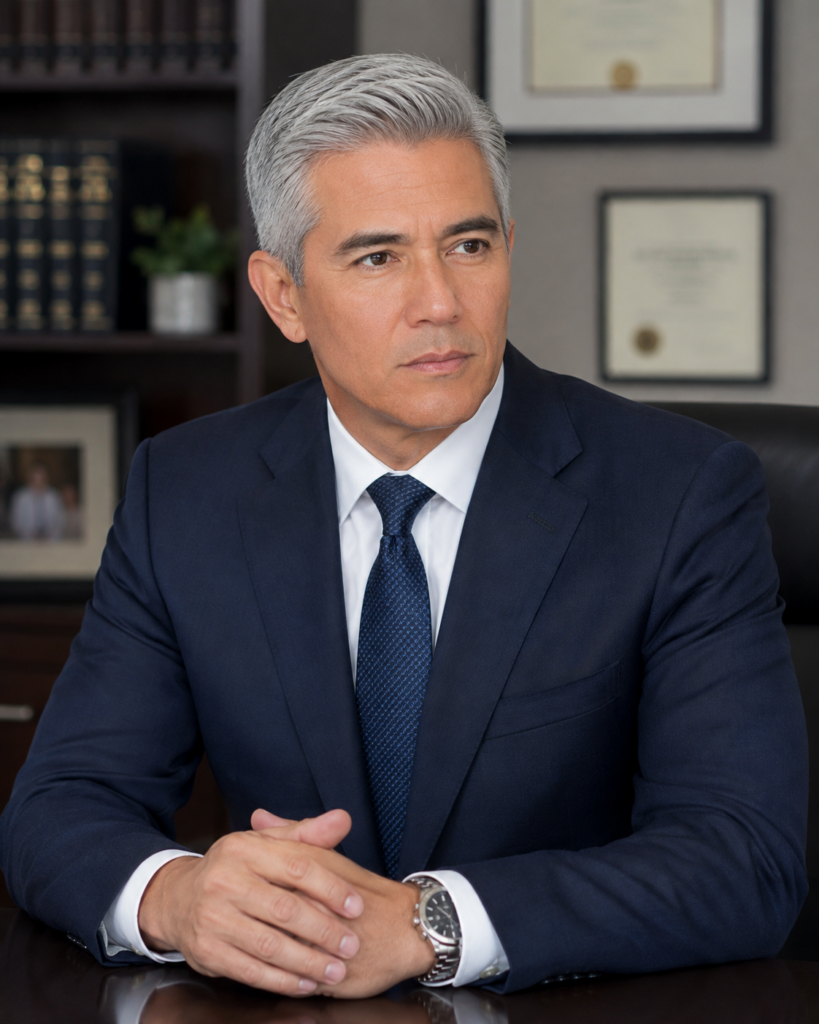
For nearly 50 years, Gerard Whiteford has inspected food-manufacturing facilities. He’s worked his way from rookie inspector to supervising Central Florida’s region.
He has also perfected one particularly useful professional skill:
Looking much easier to fool than he actually is.
So when Myra Gantry and company stage their little production designed to persuade Gerard that Uncle Mario’s Icy Adult Pops operation deserves approval, Gerard recognizes the con almost immediately.
And lets them keep going.
Why spoil everybody’s fun?
But the quiet man behind the inspector’s clipboard has lived a life Myra knows nothing about. After losing his wife in a car accident, Gerard raised their daughters—then only three and five—alone. Money was tight. He worked side jobs. But somehow Dad was still in the front row whenever his girls needed him.
They’re grown now, with families of their own.
And Dad still shows up.
The morning after the inspection, a guilt-ridden Myra arrives at Gerard’s home carrying breakfast, coffee and a confession. She begs him not to approve something she now believes was obtained dishonestly.
Gerard tells her the truth.
He knew all along.
He investigated them—including talking with Helena—and discovered something more important than their deception: why they were doing it.
Gerard believes in rules.
He’s just lived long enough to understand the difference between following the rules and understanding the people standing in front of you.
And Myra suddenly has considerably more to think about than a food-manufacturing permit.
Hans
HANS
He Fell for a Nun. Things Got Complicated.
Hans spent years managing an exclusive restaurant for Mason Tucker and becoming exceptionally good at giving wealthy customers exactly what wealthy customers expected.
Polite. Accommodating. Attentive.
And occasionally full of it.
Then Sister Helena walked into his restaurant.
Hans was immediately smitten by something he didn’t encounter very often in his professional world: complete innocence without an ounce of pretense.
Their European backgrounds provided another connection, including the remarkable discovery that Helena’s parents had been married at Hans’s church in Stuttgart.
But life interrupted the romance. Hans returned to Germany to care for his seriously ill mother, and Helena—newly liberated from convent life—went with him.
Hans helped Helena discover that leaving the convent didn’t require leaving Helena behind. Meanwhile, she gave him something he’d wanted for years: someone around whom he didn’t have to perform.
Their return to Tampa was delayed by his mother’s health—until Mom recovered sufficiently to start dating a 92-year-old man.
Apparently she’s busy.
So Hans and Helena are coming home.
And they’re planning a wedding.
Given the bride, planning may be an ambitious word.
Sophie
SOPHIE
The most emotionally stable resident in the Seniority Series. It isn’t close. 🐾
Frank and Rose share their home with Sophie, and Sophie has – without any particular announcement – become the emotional center of gravity for a household that occasionally generates more gravity than it can handle. She is warm, loyal, and an excellent judge of character. In this particular orbit, that skill gets tested regularly and at unpredictable intervals.
She knows her yard the way a person knows their own kitchen – every corner, every sound, every shift in the light. She knows the Seniority residents and what their presence means. She knows when something is off before the humans have worked out what the something is. She does not share this information in any format that could be transcribed, but she communicates it clearly enough. 🐾
Her role with Frank is less companion than compass. She stays close, she watches, and she is present in the particular way that asks nothing back. For a man navigating the specific conditions of living in the pages of the Seniority Series, this turns out to matter more than most of what gets said out loud.
The Booties for Poopies dimension of Sophie’s life arrived without her input and has expanded well beyond what any reasonable dog would have predicted. Helena built the thing. Sophie, simply by wearing the product with dignity and not visibly objecting, became its most persuasive evidence. The commercial universe recognized the value. It usually does, eventually, when an exceptionally good dog is involved.
🐾 Watches everything. Says nothing. Knows exactly what she thinks of you. 🐾
Paul
PAUL RODRIGUEZ
Please Keep Your Seat Belt Fastened. Herschel Has Changed the Schedule Again.
Paul Rodriguez spent decades flying large commercial jets between Florida and South America for Worldwide Airways before mandatory retirement finally separated him from the cockpit.
Briefly.
Now in his mid-60s, Paul pilots Herschel’s Cessna Citation Latitude—which means retirement has somehow resulted in flying Herschel, Frank, Brendan, Ida and assorted members of the Seniority Gang around the country.
Commercial aviation may have been easier.
Paul is direct, professional and almost impossible to rattle. People trust him for the most important reason you can trust a pilot:
He gets them there safely.
But underneath the matter-of-fact exterior is a compassionate man. When Ida once became frantic after losing contact with Herschel during a ground stop, Paul knew exactly which mattered more at that moment—the airplane or the frightened woman sitting in it.
In Hello Chaos, Paul and copilot David Ferri become indispensable as Herschel’s increasingly complicated operation sends the team ricocheting among Tampa, New York, Chicago and Los Angeles while the pilots carefully manage their allowable flight and rest time.
Paul is also the devoted father of two grown children and Papa to five grandchildren, all in the Tampa area.
He’s friendly with his remarried former wife, with whom he shares a longstanding joke:
“You know we’re divorced, right?”
The real other woman in their marriage was whichever jet Paul happened to be flying.
And just when Paul thought his romantic complications were safely behind him…
Mal Bessey gets on the airplane.
Good luck with that flight, Captain.
Gina
GINA ROSSI
The woman who understands phase transformation and is currently in one.
There is a particular kind of intelligence that is not just about knowing things but about needing to know them precisely, and Gina Rossi has had that quality since she was old enough to ask questions that made people uncomfortable. She is a physicist – phase transformation, the rigorous science of how matter changes state, how freezing and thawing and aging follow rules that do not bend because you’d prefer they did.
She found this comforting early on. She still does. She chose an academic career over a private-sector one, which surprised people who knew what the private sector would have paid her, and surprised nobody who knew Gina.
Mario Rossi brings his daughter into the Ice Adult Pops project because the science genuinely requires her.
The freezing behavior, the timing, the production process – these are not problems you solve with enthusiasm. She is not here by sentiment. She is here because nobody else in the Neighborhood understands what is actually happening, and she is constitutionally incapable of watching something be done incorrectly when she could simply fix it.
Logan Conway enters her professional orbit and she takes one look and categorizes him. She is thorough about this, and she is wrong about most of it. He hears “physicist” and lights up in a way that has nothing to do with phase transformation, and she clocks it immediately, and she files it under “confirms assessment.” It does not confirm the assessment.
Over the course of Book 5 in the Seniority Series she is forced to revise her data, which she finds irritating, and she does it anyway, which tells you rather a lot about both of them.
Serious scientist. Accidental romantic. One of the great phase transformations in the story.
Logan
LOGAN CONWAY
Never Confuse Ridiculous With Stupid
Logan Conway has somehow invited himself into the McCoy family, where he now considers Troy his brother and Troy’s parents his own.
Angie hasn’t exactly discouraged him.
After all, Logan once saved her treasured skillets during an encounter involving the Morales drug cartel. Troy points out that he saved his mother’s life.
Angie remains impressed by the skillets.
In his late 40s, Logan works for a secretive government operation known simply as The Company, an umbrella organization spanning America’s alphabet soup of intelligence and law-enforcement agencies.
He’s also one of its very best agents.
You’d never know it.
Logan specializes in handling crises before anyone else realizes there is one. He could be drinking orange juice at breakfast while quietly neutralizing a threat behind Troy—and probably never put down the glass.
Most people initially dismiss Logan as an incompetent buffoon.
Logan thinks that’s their problem.
Then there’s Gina Rossi. Logan was delighted to learn she was a physicist because he naturally assumed that meant she liked getting physical.
She married him anyway.
Almost.
But that’s another story.
Troy
TROY McCOY
The Guy Next Door. If the Guy Next Door Worked for The Company.
Troy McCoy looks like somebody you’d enjoy grabbing a beer with.
That’s probably intentional.
The son of Angie and Joseph McCoy, Troy is an easygoing, funny, fiercely loyal father, friend and dog lover—and somebody who’s always had a soft spot for people society would rather overlook.
He’s also one of the government’s top covert operatives.
Troy works for the shadowy organization known simply as The Company, where his particular gift is taking extraordinarily complicated investigative problems and reducing them to understandable pieces.
And while you’re having that beer with him, Troy may appear relaxed, interested and thoroughly entertained by your stories.
He is.
He’s also sizing you up.
You just won’t know it.
Troy and fellow agent Logan Conway have become something considerably closer to brothers than partners—which makes what happens at Logan and Gina Rossi’s wedding particularly troubling.
Just as Gina is preparing to marry one of Troy’s closest friends, Troy does something nobody expects:
He begs her not to do it.
Then everything goes to hell.
Fortunately, when chaos arrives, Troy McCoy doesn’t panic.
He goes to work.
Joseph
JOSEPH McCOY
The Little Guy’s Very Expensive Friend
Before retiring, Joseph McCoy headed a successful Connecticut personal-injury practice with offices throughout the state—including southern Connecticut, where some very large corporations discovered that Joe wasn’t particularly impressed by very large corporations.
To his clients, he was the guy who would fight for them.
To the people he was suing, he was something considerably less endearing.
Now in his mid-70s, Joseph is supposedly retired.
Apparently nobody explained the meaning of the word.
When thousands of Harmony Ice Cream workers suddenly find their livelihoods threatened, Joseph joins Brendan Callaway and Herschel in the fight—not because he’s interested in saving a corporation, but because he’s interested in the people who worked for it.
That’s always been Joseph’s side.
Behind the courtroom warrior is something considerably softer. He’s spent more than four decades adoring Angie, and few things entertain him more than the exploits of their son Troy and the man who somehow became their other son without ever technically being adopted, Logan Conway.
Joseph spent a career fighting powerful people for ordinary ones.
Retirement hasn’t changed his definition of a good fight.
Angie
ANGIE McCOY
The Woman Who Doesn’t Need Another Cause. So Naturally, She Finds One.
Angie McCoy may live comfortably now, but she has never forgotten what an empty cupboard looks like.
Raised in an Italian family in Cranston, Rhode Island, Angie remembers watching her mother somehow turn almost nothing into dinner. Maybe that’s why a comfortable retirement never persuaded her to become particularly comfortable with other people’s suffering.
A former Connecticut social worker, Angie has spent her life getting involved. If ordinary people need somebody in their corner, there’s an excellent chance Angie has already pulled up a chair.
She even missed the Miracle Ladies’ fake miracle—but she had a pretty good excuse. She was in remote regions of Africa helping provide food and medical care through the McCoy Foundation.
In Hello Chaos, Angie finds another mission at St. Monica’s: repurposing donated clothing so people struggling financially can walk into a job interview looking—and feeling—like they belong there.
It’s another part of one of Ida’s cockamamie plans.
Which means Angie fits right in.
She’s also the fiercely loving mother of Troy McCoy—and considers Logan Conway another son, paperwork notwithstanding.
Angie knows money can make life easier.
She also remembers when there wasn’t any.
Mario
“UNCLE MARIO” ROSSI
If It’s Frozen, Mario Probably Knows How to Make It
At around 80, Mario Rossi has spent enough time around ice cream and frozen novelties to know that machines don’t care about excuses.
His education started at Carlo’s Spa, his father’s combination general store, six-stool sandwich shop and frozen-lemonade operation. Mario watched his father work a single-barrel machine producing frozen lemonade for roadside stands.
Things got slightly more complicated from there.
After a lifetime in the industry, Mario has worked with sophisticated high-volume frozen-novelty equipment, consulted for major producers and even crawled into machinery when everybody else was standing around discussing why it wasn’t working.
Mario doesn’t mind questions.
He minds long answers to short questions.
Put him on a production floor and he’ll listen, diagnose, improvise and expect everyone around him to keep up.
Now he’s bringing those decades of experience to Tampa to help turn Uncle Mario’s Icy Adult Pops from one more cockamamie Seniority idea into an actual business.
Fortunately, he has help from his daughter Gina, whose PhD-level understanding of freezing science makes Mario enormously proud—even when nobody understands what she’s saying.
And then there’s Connie Conti.
His high-school sweetheart.
Apparently Mario has decided one startup isn’t enough.
Mal
MAL BESSEY
She Seems Nice. That’s Your First Mistake.
Meet Mal Bessey and your first reaction may be:
She seems nice.
Give it time.
In her early 60s, Mal has built a fast-food and real-estate empire worth billions, encompassing thousands of Mexicocina and Uncle Clayton’s BBQ locations. Herschel has long served as one of her trusted real-estate and financial advisers.
Yet nothing about Mal particularly screams billionaire.
Unless you’re sitting across from her negotiating commercial real estate.
Then you may want to check your wallet.
Mal can initially seem reserved—even standoffish. People who make it through the outer defenses discover someone considerably more entertaining: wickedly sarcastic, fiercely loyal and perfectly willing to take one for somebody she loves.
Just ask Troy McCoy, who has long occupied the role of Mal’s unofficial little brother.
In Hello Chaos, Mal becomes an important financial partner in Herschel’s plans for expanding Uncle Mario’s Adult Pops operation.
Then she meets Paul Rodriguez.
They trade insults.
Neither retreats.
And somewhere between sarcastic jab number six and uncontrollable laughter, two people who haven’t laughed like that in years realize they might want to continue the conversation.
Mal has acquired businesses, restaurants and real estate across America.
Trust has proven considerably harder.
Her former husband’s betrayal made sure of that.
Paul may be about to discover the one acquisition Mal never planned on making.
I particularly like Mal + Paul now that you’ve described it this way.
Please don’t make their first meeting traditionally romantic.
Let them annoy the hell out of each other.
Then one lands a particularly good shot. The other cracks up. That makes the first connection laughter, not attraction.
That feels much more like these two.
Tony
TONY SORIANO
The kitchen is his. Everything else, he wisely leaves to Maria.
Tony Soriano came to an early understanding of what he was good at and what he was not, and he has spent his life operating accordingly. He is a chef and a restaurateur and a man who loves his family at considerable volume.
The front of the house is Maria’s – the customers, the vendors, the ten thousand details that keep Toma Bistro running – and Tony supports this arrangement completely. He has always trusted Maria to handle her domain. He has also always been aware that her domain will function correctly with or without his input, which makes trusting her very easy.
He is social, and playful in a way that does not always account for room temperature before entering. His energy can take a situation that was progressing peacefully and give it a productive boost in an unintended direction. His sons understand this. Maria manages it. Tony, for his part, means well, and the distinction between meaning well and reading the room is one he has been working on for some years with limited but genuine progress.
He has always understood food completely. Not as something you consume but as a language – specific, loaded, passed down through recipes nobody wrote down because the writing was never the point. Food is Tony’s primary form of I love you. It is his argument, his apology, his celebration. It is, on the right Sunday, all three at once. His sons run the restaurant now. The sauce, though, is still his.
Family is everything, the kitchen is sacred, and Maria runs the rest – as it should be in Tony’s world.
Jack
JACK SORIANO
The one person in the Seniority neighboor who has ever read the fine print.
Jack Soriano grew up in the same family restaurant as his siblings, watched the same particular chaos, ate the same food, and came away from it having decided that the situation required a lawyer. He was not wrong. As the eldest son of Maria and Tony, partner-level attorney in New York City, married to Zoey, father of three boys, he has built a life of admirable orderliness in a family that has never once operated in an orderly fashion. This is either a calling or a survival mechanism, and with Jack it is probably both.
He is serious in the specific way of someone who has spent decades reading documents that other people signed without reading, and that professional gravity has settled into his bearing permanently. Clean-shaven, straight-laced, deliberate. “Please be advised” is not a verbal tic so much as a worldview. He does not reach for the dramatic or the sentimental when the situation can be addressed with a clear statement of terms.
Jack is quietly wonderful because his seriousness is the joke, and he has no idea. He does not need to be funny. He simply needs to be Jack, and the residents of the Seniority neighborhood do the rest. Jayden in particular has made a careful study of every available button and never hesitates to press them, in sequence, with evident satisfaction. Jack responds as he responds to most things: formally and without adequate preparation.
He especially bristles when Jayden, his friend since he first arrived in New York from Iowa, refers to Jack’s middle boy as Jayden, Jr.
Jack didn’t leave the Seniority Neighborhood. He just added terms and conditions.
Cybil
CYBIL DELISLE
She was ready before the camera found her.
Cybil DeLisle does not need to raise her voice. She has never needed to raise her voice. Over the course of an award-winning career – one of Ida’s most prized clients, an actress who has spent decades understanding exactly what it means to be watched – she has discovered that the quieter the delivery, the wider the damage radius. This is not malice. She would not recognize malice in herself, any more than a scalpel would recognize surgery. It is simply the most precise tool available, and Cybil has always preferred precision.
She is sophisticated in a way that appears effortless because the effort happened a long time ago and she has declined to repeat it publicly. She is conscious of appearance, of cameras, of the particular mathematics of aging in a business that does the arithmetic for you whether you ask or not. She has made her calculations. She keeps her plastic surgeon’s number accessible, as Jayden has learned. She has deployed the laryngitis card with the timing of someone who once studied timing for a living.
Her relationship with Jayden is one of long-standing professional partnership and affectionate blood sport. She adores him. She is also the only person in the room who can dismantle him with four words and have him nodding along. He is the younger brother she never had…or didn’t particularly want.
When Helena’s Booties for Beauties line comes together – that inevitable, elegant extension of the Booties for Poopies empire – Cybil’s position on it is uncomplicated: she is the face, and this is not a conversation.
While sophistication is her weapon, warmth is her holster.
Jayden
JAYDEN BRYANT
Nearly thirty years in the spotlight. Still the same guy.
There is a particular kind of person who can walk into a room full of Seniority neighborhood people – older and more weathered than himself – and make absolutely everyone feel like he showed up just for them. Jayden Bryant is that person. He was born in Birch Fork, Iowa, shaped somewhere between the cornfields and the footlights, and he has spent the better part of three decades proving that neither Broadway nor a film career of genuine substance can knock the Midwest entirely out of a person.
He is in his late forties, young-looking in the way that tends to make men his age seem vaguely suspicious but is, in Jayden’s case, simply the truth. He is married to Julie, an epidemiologist and therefore professionally acquainted with contagion – which may explain how she recognized Jayden’s particular brand of charm early and decided it was worth keeping. His working life intersects with Cybil’s in a relationship that is professional, performed, and not without its friction, which is to say it is exactly like most worthwhile creative partnerships.
The headshot story is the one his friends will tell about him long after everything else fades. He asked for opinions. The opinions arrived – a mask from Jack, a plastic surgeon’s number from Cybil, a general sense from the room that something needed addressing. He listened to all of it. He thought about it. Then, from somewhere deep in the earnest heart of Birch Fork, Iowa, the question came: *”FIX WHAT?”*
He is not performing innocence; he genuinely has it. Broadway never took that from him, which is the real achievement.
Midwestern nice, with absolutely no idea why everyone’s laughing.
Myra
MYRA GANTRY
Bless Your Heart. You Never Saw Her Coming.
Myra Gantry is a Southern belle with impeccable manners, spontaneous instincts and the unnerving ability to deliver devastating truth while sounding as though she’s complimenting you.
Sugar is frequently your first warning.
Bless your heart may be your last.

Myra can charm a room, redirect a conversation and join an outrageous scheme with enthusiasm—particularly when she believes the people behind it are trying to accomplish something worthwhile.
But Myra has something more important than charm.
A conscience.
When a little deception involving a food-plant inspector named Gerard Whiteford stops feeling harmless, Myra discovers there are lines even she doesn’t want to cross. What begins as another Seniority caper forces her to look beyond the scheme and see the man standing on the other side of it.
That’s Myra.
Funny, flirtatious and occasionally dangerous with a Southern aphorism—but never so committed to the joke that she can’t recognize the human being underneath it.
And when Rose wonders whether these people ever go too far?
Myra already has the answer:
“Sugar, it’s a badge of honor with them.”
Joe
JOE CAPUTO
Take an Apple for the Road.
Between 8 A.M. and 6 P.M., Monday through Saturday, Joe Caputo is the king of produce.
He grew up in the business, learning from his father at the family fruit stand before expanding that modest operation into a major produce supplier serving restaurants and supermarkets throughout New England, New York and the Mid-Atlantic.
His father taught him two rules.
Never pay too much.
And always give the customer an apple for the road.
The first helped make Joe a formidable negotiator.
The second taught him something more important: give people a reason to remember how you treated them and they’ll give other people a reason to remember you.
Outside business hours, Joe happily relinquishes the throne. He’ll follow Rita through an open house, critique the place afterward, and settle in with her at night for an action thriller.
Joe isn’t usually the loudest person in a Seniority conversation.
He doesn’t have to be.
But mention produce—particularly an apple—and somehow Joe will find his way in.
There’s probably one in his pocket.
Connie
CONNIE CONTI
At 82, She’s Got Maybe 20 or 30 Years Left.
Connie learned independence the hard way.
She met her husband shortly before graduating from Westerly High School, moved to Long Island, raised two children—and lost her husband when he was only thirty.
There was no grand plan for what came next. There were children to raise and bills to pay.
So Connie went to work.
She took restaurant jobs and discovered that the recipes she’d learned from her mother weren’t merely family favorites. People wanted them. Soon restaurants wanted Connie because of them.
She built a life, raised her family and developed the kind of confidence that doesn’t require announcing itself when she enters a room.
Eventually she joined the family at Toma Bistro, where food isn’t simply what they serve. It’s what they do.
Now, at 82, Connie has decided retirement might finally be worth trying.
Not because she’s slowing down.
Quite the opposite.
As Connie sees it, she may only have another twenty or thirty years left.
And Florida happens to contain something besides sunshine.
His name is Mario Rossi.
They have history.
Apparently, they’re not finished making it.
Rita
RITA CAPUTO
She’s Just Looking. That’s How It Starts.
Some people have hobbies.
Rita has real estate.
She has spent her working life in the business, and retirement hasn’t done much to change the arrangement. From the moment her feet hit the floor in the morning until she goes to bed at night, some portion of Rita’s brain is evaluating property.
Open houses are recreation.
Online listings are entertainment.
Zillow is practically family.
Rita is confident, capable and accustomed to getting things done. She usually has a contact, knows somebody who knows somebody, or can tell you exactly what’s wrong with a property before the agent finishes saying “Welcome.”
Her husband Joe frequently tags along to open houses.
Not because he’s looking to move.
They just enjoy criticizing the property afterward.
Underneath Rita’s considerable forward momentum is someone fiercely invested in the people around her. If something needs doing, Rita doesn’t spend much time discussing whether it can be done.
She’s already looking for the person who can do it.
And if Rita ever tells you she’s “just looking” at a house?
Joe knows better.
Rose
ROSE ROSSI
She’s Not Sitting in a Rocking Chair.
Before retirement, Rose Rossi ran finance, billing and collections for Turner Memorial Hospital—a career requiring patience, judgment and the ability to deal calmly with people who would test both.
Then she retired with Frank.
So much for that training going to waste.
Rose is practical, warm and wonderfully difficult to rattle. She’s usually the person in the room who understands what’s happening before everybody else finishes explaining it.
What she doesn’t want is retirement becoming an exercise in preserving yesterday.
Rose wants movement. New places. New people. New experiences. She likes spontaneity and genuinely enjoys helping others. Sitting around admiring everything she and Frank accumulated over the years holds considerably less appeal.
That occasionally puts her at odds with a husband who has an emotional attachment to the past—and probably a spreadsheet cataloging it.
Rose doesn’t need many words to make herself heard. Sometimes it’s a look. Sometimes a sigh.
And sometimes, after watching another perfectly innocent Seniority conversation plunge over a cliff, it’s simply:
“There’s never any too far with you people.”
She’s right.
Frank
FRANK ROSSI
The man with the system. The reluctant visitor. The spreadsheet.
Frank Rossi likes things that can be understood, organized, measured, and preferably entered into the appropriate column. Unfortunately, he lives among people.
He is practical, analytical, stubborn, loyal, and possessed of the particular confidence of a man who knows that somewhere—possibly on his computer—there is information supporting his position. Frank doesn’t resist change merely for the pleasure of resisting it. He wants to understand what is being changed, why anybody thinks it needs changing, what it will cost, and whether somebody has considered the consequences.
Usually somebody hasn’t.
For Frank, Westerly was never simply a house or a town. His childhood was filled with movement after his parents divorced when he was five—state after state, school after school, seven elementary schools before stability finally arrived. The Westerly house became something more than property. It became evidence that some things could stay put.
That helps explain why the idea of Florida initially sounded less like an opportunity than an eviction from his own life.
Rose understood that before Frank completely did. She gave him room to arrive at change in his own time, which is fortunate because pushing Frank usually produces the same result as pushing a brick wall, except the wall complains less.
Once Frank commits, however, reluctance becomes determination. He notices problems, organizes information, asks questions other people would rather avoid, and has an irritating habit of becoming useful precisely when everybody was enjoying making fun of him.
And somewhere nearby is Sophie—watching him, staying close, and occasionally demonstrating that life’s most important things cannot be entered into a spreadsheet.
Frank is beginning to understand that.
He doesn’t hate change. He’d just like it to submit the proper paperwork first.
Herschel
HERSCHEL LIEBOWITZ
He Can Afford Anything. Except Peace and Quiet.
Herschel Liebowitz made his fortune seeing possibilities where other people saw problems.

His specialty is distressed commercial real estate: properties everyone else has given up on, buildings nobody quite knows what to do with, and opportunities hidden beneath somebody else’s headache. Herschel buys them, figures out what they could become, and turns them into something worth considerably more than he paid.
It’s a philosophy that made him extraordinarily wealthy.
It may also explain his attraction to Ida.
Herschel is restrained, observant and remarkably unimpressed by his own bank account. He watches his weight, exercises, rarely drinks and can be wonderfully particular about money—especially when somebody is charging him for something he doesn’t think is worth it.
A $725 hotel room?
Fine.
A pathetic sliver of soap in that room?
Now we have a problem.
His greatest talent may be understatement. While everyone around him is talking, arguing, arranging, scheming or explaining, Herschel is usually watching. And when he finally says something, there’s a good chance it’s the line everybody remembers.
Beneath the dry humor is a man who quietly does the right thing. He doesn’t need applause, and he certainly doesn’t need anyone knowing what something cost.
Unfortunately, he married Ida.
Everybody knows what everything cost.
Helena
Helena
Helena hears what you mean, not what you say.
The thing you notice first about Helena is not the rosary, though the rosary is always there. Before she wore it as part of her habit. Today, she wears it in her heart.
She listens attentively the way someone listens when they genuinely believe what you are telling them might be the most important thing said to
them today. It usually isn’t. She gives it that weight anyway. This is a particular kind of Czech, ex-nun wisdom that presents itself, on the surface, as something simpler than it is.
She is in her early fifties, formerly Sister Helena, formerly of a convent in Tampa, Florida, currently of this life in all its unexpected abundance. Her English is heartfelt and approximate. She means “I gave” and says “I give.” She means “we went” and says “we go.” The tenses drift, and the warmth does not. People follow her meaning the way you follow a song in a language you do not speak – something comes through regardless.
Hans has become Helene’s significate other. She has become his world.
He saw her clearly from the beginning, when she walked into a NYC restaurant where he was the manager which is the right starting place for a marriage. Together they took Booties for Poopies – her small-footwear business, born from Frank’s leftover industrial trash-bag material, championed by Sophie (Frank’s canine) as its glorious face – into something with distribution, manufacturing, and an expanding logic all its own.
Helena has always looked after whoever gets left behind. She does not think of it as a mission. She thinks of what you do.
She never stopped being a sister. Just the location, her outfit and focus have changed. Yuh.
Her people are whoever needs a person. The downtrodden, the overlooked, the slightly confused. Helena finds them without trying.
Goodness, it turns out, does not require a habit
Maria
MARIA SOIRIANO
She feeds you. She loves you. Don’t push it.
There is a particular kind of woman who holds a family together not through strategy but through an absolute, unshakeable refusal to let it fall apart, and Maria Soriano is that woman. Sister to Connie and Rita, wife and full partner to Tony, she has been the connective tissue of the Soriano family for as long as anyone can remember, and she has done it the way she does most things: with warmth, with directness, and with enough authority that nobody standing near her ever quite forgets it’s there.
Her sons learned this young. Jayden, who arrived later and by a different route, learned it just as thoroughly – Maria extended the same affection to him that she extends to her own boys, and with it the same expectations. She is an equal opportunity disciplinarian. The measuring stick does not move for sentiment.
Toma Bistro is Tony and Maria’s restaurant in the legal sense. However, in every other sense, it is Maria’s: part trattoria, part family court, part emergency feeding station for whoever walks in looking like they haven’t eaten or haven’t been listened to, either of which she treats as a genuine emergency. She came up in the restaurant world and it made her practical, unromantic about hard work, and completely romantic about the table.
She is less strategic than Connie and warmer in manner, but mistaking warmth for softness is the kind of error people make with Maria exactly once. Everything eventually traces back to food, family, and Sunday sauce. She has always known this. She simply waits for everyone else to catch up.
Now retired, she and Tony are bringing their flare for Italian cooking to St. Monica’s Kitchen and also to Seniority Neighborhood residents.
Nurturer, feeder, keeper of the peace – and the one who decides when the peace is over.
Ida
IDA KATZ-LIEBOWITZ
The force of nature. The bridge. The one who already knew.
There are people who enter your life quietly, wait to be invited in, and gradually become important. Ida Katz-Liebowitz has never understood the point of any of those steps.
She arrives.
Ida has spent a lifetime arranging things—people, problems, opportunities, occasionally entire futures—with the absolute confidence of someone who assumes that if everybody would simply stop talking for a minute, she could straighten this out. She is direct, relentless, fiercely loyal, and usually several moves ahead of the people who have only just discovered there is a game.
The black straw hat helps. It has become less an accessory than an early-warning system.
Ida’s gift is people. She sees connections before anyone else does and has an almost unnerving instinct for knowing who needs whom. She does not merely introduce people; she rearranges the furniture of their lives and then acts mildly surprised when everything fits better afterward. Resistance is acknowledged but rarely considered relevant.
Underneath all that force is the reason people let her get away with it. Ida cares. Deeply. She has little patience for ceremony and even less for self-pity, but when somebody needs help, she is already moving before everyone else has finished discussing what should be done.
She can be infuriating. She can be exhausting. She can make a perfectly capable adult wonder how they somehow ended up doing exactly what Ida wanted while believing it was their own idea.
It probably wasn’t.
Ida doesn’t take over. She simply waits for everyone else to realize she’s already in charge.
Dive into the unique traits and backgrounds of each character, revealing the depth and complexity that enrich our storytelling and captivate audiences.